
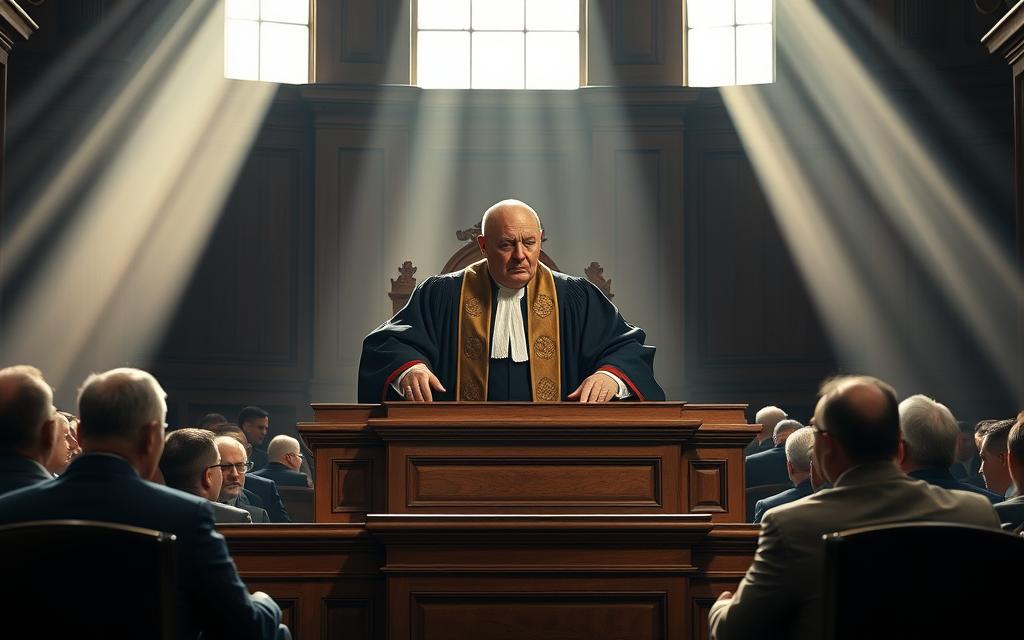
About 10% of civil trial verdicts in the U.S. can be reviewed by a judge. This shows that jury decisions are not always final. It’s a part of the legal system that many don’t get.
A judge can overrule a jury’s decision. This is a key part of the American justice system. It helps make sure laws are followed and justice is done, even if a jury makes a mistake.
To understand this, you need to know about the balance between judges and juries. The law says when a judge can step in. This keeps the legal process fair and stops wrongs from happening.
Key Takeaways
- Judges have limited but significant power to overrule jury decisions
- Overruling typically occurs in cases with insufficient evidence or legal errors
- The process protects the integrity of the legal system
- Judicial review serves as a critical check on jury verdicts
- Overruling decisions can be appealed by affected parties
Understanding the Jury’s Role in Trials
The jury system is key in the American legal process. Juries help decide the facts of a case and ensure a fair trial. They listen to evidence and testimony, then make a verdict that shows justice.
The Significance of Jury Decisions
Jury decisions are very important in court. They do many things:
- Evaluate witness trustworthiness
- Look at the evidence
- Decide on civil and criminal cases
- Protect rights with their group judgment
Navigating Jury Instructions and Deliberation
During trials, judges give important instructions to jurors. These instructions explain legal rules, laws, and what jurors must do. The deliberation process includes:
- Looking at all evidence
- Talking about the case privately
- Trying to agree on a decision
- Telling the court their verdict
Learning about jury selection and decision-making shows how important citizens are. They help keep justice alive in the legal system.
When Can a Judge Overrule a Jury?
Judges have a big role in the legal system. They can change jury decisions, mainly in civil cases. This is because they have more power there.
Jury verdicts aren’t always the last word. Judges can step in under certain conditions. They have the legal right to do so.
Legal Standards for Overruling
Judges can change jury decisions for a few reasons:
- Not enough evidence to back the jury’s choice
- Big legal mistakes made during the trial
- Problems with how the trial was run
- Decisions that go against the law
Types of Cases Involving Jury Overruling
How often a judge changes a jury’s decision varies:
- Criminal Cases: Judges rarely change jury decisions here
- Civil Cases: Judges might change decisions more often
- Complex Litigation: Judges often review these cases
Knowing how judges and juries work together is important. It shows how the legal system balances these two parts.
The Process of Overruling a Jury Verdict
When a judge thinks about overruling a jury verdict, they look very closely. They make sure the decision fits with the law and justice.
- Review post-trial motions from lawyers
- Look at important case law and legal rules
- Check if the evidence was enough during the trial
- See if there were legal mistakes that affected the jury
Steps a Judge Takes to Overrule
Judges pay a lot of attention when they might overrule a jury. They figure out if the jury’s choice was right or if they need to step in.
- Look at trial transcripts carefully
- Check out past court decisions
- Think about what the original verdict means legally
Announcement of the Ruling
When a judge decides to overrule a jury, they make a formal announcement. They explain why in detail, making sure everyone understands.
The ruling comes with a written explanation. It tells why the judge changed the jury’s decision. This is part of the court’s official record.
Grounds for Overruling a Jury Verdict

Judges have the power to change a jury’s decision in certain cases. They can do this if important legal rights are broken or if big mistakes happen during the trial.
There are a few main reasons a judge might change a jury’s choice:
- Not enough evidence to back up the jury’s decision
- Big legal mistakes made during the trial
- Clear breaks of legal rules
- Jury misconduct
Insufficient Evidence Challenges
If a jury’s choice isn’t supported by enough evidence, a judge can step in. Insufficient evidence means the proof given wasn’t strong enough to prove guilt or judgment.
Legal Errors in the Case
Big mistakes in how the trial was run can change the outcome. Judges look to see if legal mistakes could have unfairly swayed the jury’s choice. This might mean they need to start over.
Some examples of legal errors include:
- Wrong evidence being allowed in
- Bad instructions to the jury
- Breaking constitutional rights
- Showing bias in the trial
This strict approach helps keep everyone’s legal rights safe during court cases.
Common Terms Related to Jury Overruling
Understanding the legal system means knowing key terms. These terms affect court decisions and legal actions. When jury verdicts are questioned, important legal ideas come up.
The legal world is full of special words. These words help judges and lawyers talk about legal details.
Judgment Notwithstanding the Verdict (JNOV)
Judgment Notwithstanding the Verdict (JNOV) is a strong tool in the legal system. It lets judges change a jury’s choice. This tool helps fix mistakes or lack of evidence.
- Occurs when jury verdict lacks substantial legal support
- Requires compelling reasons for overturning the original decision
- Protects against potentially unfair or legally incorrect verdicts
Mistrials and Their Implications
Mistrials are another key idea in court decisions. They happen when trials can’t end fairly because of big mistakes or problems.
| Mistrial Cause | Potential Outcome |
|---|---|
| Jury Misconduct | Complete retrial of the case |
| Hung Jury | Possibility of new trial or negotiated settlement |
| Procedural Errors | Case dismissal or requirement for new proceedings |
Knowing these terms helps us see how the legal system keeps things fair and right.
Consequences of a Judge Overruling a Jury
When a judge overrules a jury, things get very complicated. This change affects many parts of the legal process. It impacts the rights of everyone involved.
Having a jury verdict overturned can be very hard for all sides. Defendants might face big changes in their case. This could change their whole legal path.
Impact on the Defendant
Defendants who lose their jury verdict face big challenges:
- They might lose the good outcome they got from the jury.
- They could have to spend more money on appeals.
- They might feel stressed and unsure for a long time.
- The legal fight could go on longer.
Legal Recourse for the Jury
Jurors usually don’t have many choices after a judge’s decision. They might feel really upset with the legal system. The system knows how complex this can be.
Jurors can:
- Ask for more information about the judge’s choice.
- Learn why the judge decided to overrule them.
- Understand that judges have a role in keeping things fair.
The mix of jury decisions and judge’s power is a key part of the US legal system. Every time a judge overrules, it’s a big deal. It means looking closely at rights and fairness.
Appeals and Overruling Decisions
When a judge overrules a jury’s verdict, the legal system has a key way to challenge these decisions. People unhappy with court decisions can appeal. This lets a higher court review the original case.
The appeals process is a key part of the judicial system. It checks if there were mistakes in the legal decisions. This helps protect people’s rights and keeps court decisions fair.
Process of Appealing a Judge’s Ruling
Appealing a court decision takes a few steps:
- Filing a formal notice of appeal within a set time
- Preparing detailed legal documents
- Showing why the legal ruling was wrong
- Paying court fees
Outcomes of an Appeal
Appeals courts can make different decisions:
- Affirm the original judge’s ruling
- Reverse the decision completely
- Send the case back for more work
- Change parts of the original judgment
Knowing about appeals helps people deal with the legal system better. It makes sure they can fight wrong court decisions.
Famous Cases of Jury Overruling
The legal world has many stories where judges overruled jury choices. These moments show how complex the trial process is. They also highlight the important role of legal judgement in our justice system.
- The McDonald’s Hot Coffee Case (Liebeck v. McDonald’s Restaurants, 1994)
- The Central Park Five Exoneration
- The O.J. Simpson Civil Trial
Landmark Supreme Court Decisions
Supreme Court cases have shaped when judges can change jury verdicts. These decisions often depend on key legal rules and constitutional rights.
- Johnson v. Louisiana (1972) – Talked about non-unanimous jury verdicts
- Apodaca v. Oregon (1972) – Looked at how juries make decisions
High-Profile Trials with Judicial Interventions
Some trials are famous for the balance between jury and judge. These cases show how a judge’s review can change a trial’s outcome.
These trials show the trial process is complex. Judges make sure justice is done. They may need to step in if jury decisions don’t follow the law or lack evidence.
The Judge’s Discretion
Judges are key in the legal system. They make sure justice and fairness are served. They have the power to make tough decisions in complex cases.
Judges have special rights to check jury verdicts closely. They make sure the law is followed and justice is done.
Balancing Legal Considerations
Judges look at many things when checking jury verdicts:
- Sufficiency of evidence presented
- Adherence to legal procedural standards
- Potential systematic biases
- Constitutional protections
Scope of Judicial Discretion
Judges have a lot of freedom to review trial results. They can step in when important legal rules might be broken.
| Judicial Decision Criteria | Key Considerations |
|---|---|
| Evidence Quality | Comprehensive and substantive proof |
| Legal Precedent | Alignment with established legal standards |
| Constitutional Rights | Protection of individual liberties |
Judicial discretion is key to keeping legal proceedings fair. It helps justice go beyond just following rules.
Jury Nullification: A Special Case
Jury nullification is a special part of the legal system. It happens when a jury decides to let a defendant go free, even if they are guilty. This shows how jurors can use their own judgment.

This idea lets jurors think about what is right, not just the law. It lets people help make justice fair. They look at the facts and if the law is fair too.
Understanding Jury Nullification
This idea is based on a few important points:
- Jurors can vote their conscience
- Laws may sometimes conflict with community standards
- Individuals can challenge systemic injustices
Historical and Legal Context
In American history, jury nullification has been key. It has helped in many important cases. Racial discrimination cases and civil rights movements used it to fight unfair laws.
| Historical Period | Nullification Context | Societal Impact |
|---|---|---|
| Pre-Civil Rights Era | Acquittals in racial discrimination cases | Challenged discriminatory legal systems |
| Prohibition Period | Refusal to convict alcohol-related offenses | Highlighted unpopular legislative restrictions |
| Modern Era | Drug law challenges | Questioned mandatory sentencing |
Even though judges don’t like to talk about it, jury nullification is very powerful. It shows the jury’s big role in the legal system.
The Future of Jury Overruling in the U.S.
The way courts make decisions is changing. New trends are making judges think differently about jury verdicts. Things like technology and how society views justice are changing how judges decide.
There are a few big changes happening in courts:
- More focus on judges’ choices
- Need for clear decisions
- Using technology in court
Emerging Judicial Decision Trends
Law experts are talking about new ways to mix judges’ power with jury votes. The debate on jury trial rights shows big challenges in keeping justice fair.
Some possible changes could be:
- Clearer rules for judges to disagree with juries
- Better ways for appeals courts to check decisions
- Better instructions for juries
Technology and Future Legal Processes
Artificial intelligence and data are going to change court decisions a lot. They might help judges make fairer choices, less based on personal opinions.
The future of judges overruling juries will be about finding the right balance. It’s about keeping the right to a fair trial strong.
Conclusion: The Balance Between Jury and Judge
Judges and juries are key to the US legal system. Judges make sure legal rights are safe. They also keep the community’s views in mind.
It’s important to know how judges and juries work together. The legal system has grown over time. No one has all the power. Judges mix community views with legal rules to solve big problems.
Our legal system is strong because it listens to everyone. Jurors share what they know from their lives. Judges use their legal knowledge to help. This way, justice is fair and follows the law.
Reflecting on Judicial Perspectives
The relationship between judges and juries is vital in the US justice system. People should stay involved. Every role, whether as a juror or judge, helps keep justice fair.