

Did you know that about 4,168 boating accidents happened in the United States in 2020? These accidents led to 767 deaths. When a boating accident happens, the first thing a boat operator must do is make quick, important choices. These choices can save lives.
It’s key for every boat lover to know how to handle a boating accident. Experienced boat drivers know to stay calm and think clearly in an emergency. This can stop more problems and keep people safe.
Your first job is to keep everyone on board safe and check the area around you. Fast thinking and smart actions can lessen dangers. They also help get a rescue team ready to help.
Key Takeaways
- Prioritize passenger safety immediately after an accident
- Remain calm and assess the situation quickly
- Check for possible injuries among passengers
- Prepare to signal for emergency help
- Document the accident details for future use
Understanding the Immediate Response
When a boating incident happens, it’s very important for the boat operator to act fast. The first few moments can decide if everyone is safe. A quick and smart response can turn a bad situation into a manageable one.
The Importance of Staying Calm
Keeping calm is the first step in handling any boat emergency. Panic can make you make bad choices. Boat operators need to:
- Take deep breaths
- Focus on safety first
- Talk clearly with everyone on board
- Look at the situation clearly
Assessing the Situation
It’s important to check the situation quickly. Quick mental mapping helps spot risks and what to do. You should think about:
- The weather
- Water currents
- How close you are to other boats
- Any dangers in the environment
Taking Stock of Your Vessel
Checking your boat right away is key to avoiding more problems. Boat operators should look for:
- Any damage to the boat
- Leaks
- If the fuel system is okay
- If the electrical system works
By checking these things, boat operators can handle the situation well. This keeps everyone safe and reduces risks.
Checking for Injuries
After a boat crash, it’s key to follow the right steps to keep everyone safe. You need to check for injuries right away.
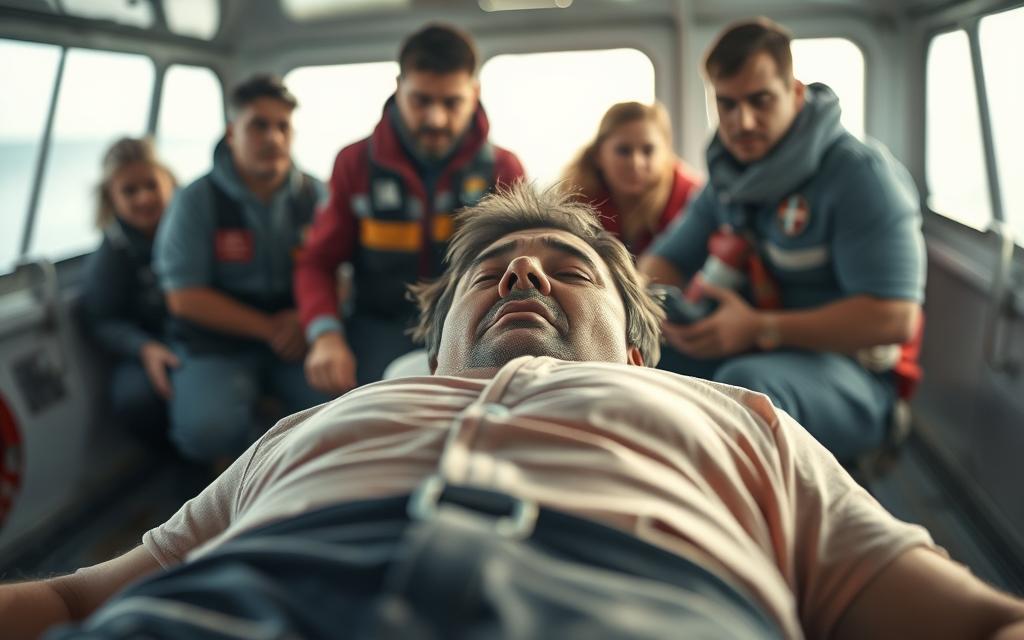
Right after the crash, focus on keeping everyone safe. Checking for injuries carefully can stop more harm.
Evaluating Your Passengers
Here’s how to check passengers for injuries:
- Check if they can wake up and talk
- Look for any obvious injuries
- Ask if they’re in pain
- Do a quick check from head to toe
Organization of Medical Assistance
It’s important to call for help fast. Use your marine radio or phone to call emergency services. Tell them where you are.
| Injury Type | Immediate Action | Priority Level |
|---|---|---|
| Bleeding | Apply direct pressure | High |
| Unconsciousness | Check breathing, prepare CPR | Critical |
| Potential Fractures | Immobilize affected area | Medium |
Prioritizing Serious Conditions
When checking for injuries, always focus on the most serious ones first. Look for shock, a lot of bleeding, or trouble breathing. Your fast action can save lives in a boat crash.
Ensuring Safety on the Water
After a maritime incident, a boat captain must keep everyone safe. They need to act fast and smart to avoid more problems. This includes protecting passengers and the water around them.
When dealing with a maritime incident, securing the area is key. Boat operators must quickly spot risks and start safety steps right away.
Identifying Hazards Nearby
It’s important to scan the water for dangers fast. Look for:
- Other boats close by
- Things underwater that could harm the boat
- Weather changes that could be risky
- Risks of hitting something
Signaling for Help
Good communication is vital in a maritime emergency. Use many ways to signal for help:
- Marine radio distress signals
- Bright-colored flares
- Emergency sound signals
- Visual distress flags
Positioning Your Boat Safely
Positioning your boat wisely can prevent more accidents. Try to move away from busy areas but stay visible for rescue teams. If you can, anchor in a safe spot to protect everyone.
Your fast thinking and actions can greatly affect safety during a maritime incident.
Documenting the Accident
First, make sure everyone is safe. Then, start documenting the accident. This helps protect your rights and supports insurance claims.
When an accident happens, collecting evidence is key. It’s important to get the facts right after the incident.
Gathering Evidence on Scene
Collecting evidence needs a careful plan. Here are some steps:
- Look over the accident area well
- Keep physical evidence safe
- Save any damaged parts
- Remember the weather and where things are
Taking Photos for Insurance
Photos are very important. Take clear pictures of:
- Damage to boats
- Any injuries
- The water and weather
- Where the boats were after the accident
Writing Down Witness Information
Witnesses can give important views. Get their contact info and a quick statement. Ask for:
- Full names and how to reach them
- What they saw
- If they can give a detailed statement later
Good documentation can make things easier. It helps avoid legal problems after an accident.
Contacting Authorities
When a boating accident happens, it’s important to know what to do first. This ensures safety and follows the law. The steps to take include talking to the right people.
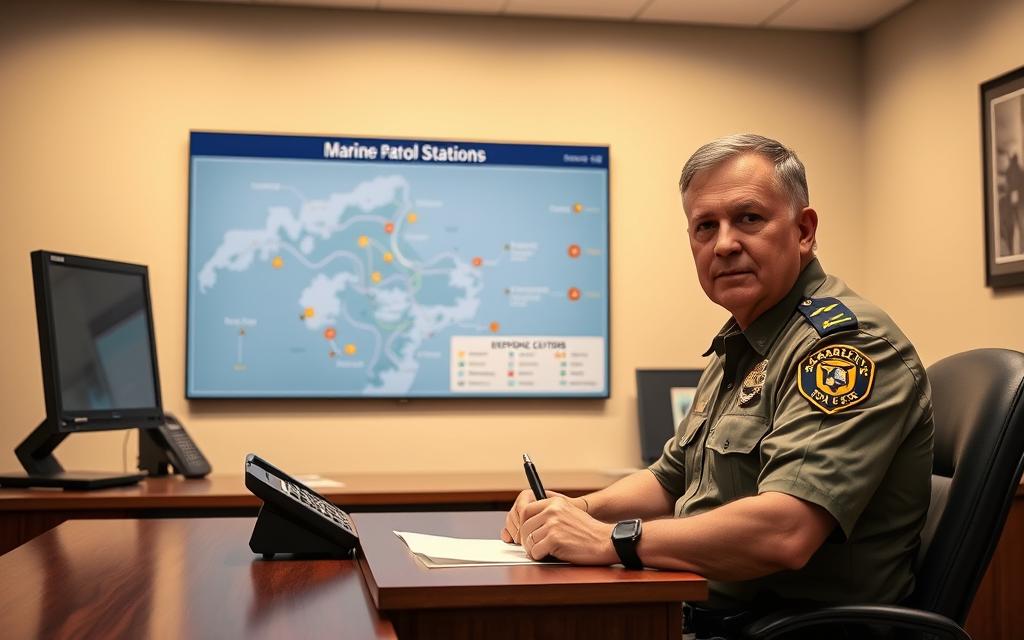
Boat operators need to know when to report an accident. The rules for calling authorities depend on how bad the accident is.
When to Call the Coast Guard
You should call the Coast Guard right away if:
- Someone is seriously hurt and needs a doctor
- Someone has died or could be in danger
- The boat is broken and might sink
- There’s a big mess or damage to the environment
Reporting to Local Law Enforcement
Local marine or water police are key in recording boating accidents. They need you to:
- Give them all the details of what happened
- Share who was involved and how to reach them
- Tell them where and when the accident happened
- Show them any damage you can see
Following Legal Guidelines
Every state has its own rules for reporting boating accidents. Not reporting can lead to big fines. Most places want you to report within 48-72 hours if:
- The damage is over $2,000
- Someone got hurt and needs more than just first aid
- The boat is completely lost
- Someone is missing
Being quick and cooperative is very important after a boating accident. Always put safety and following the law first.
Notifying Your Insurance Company
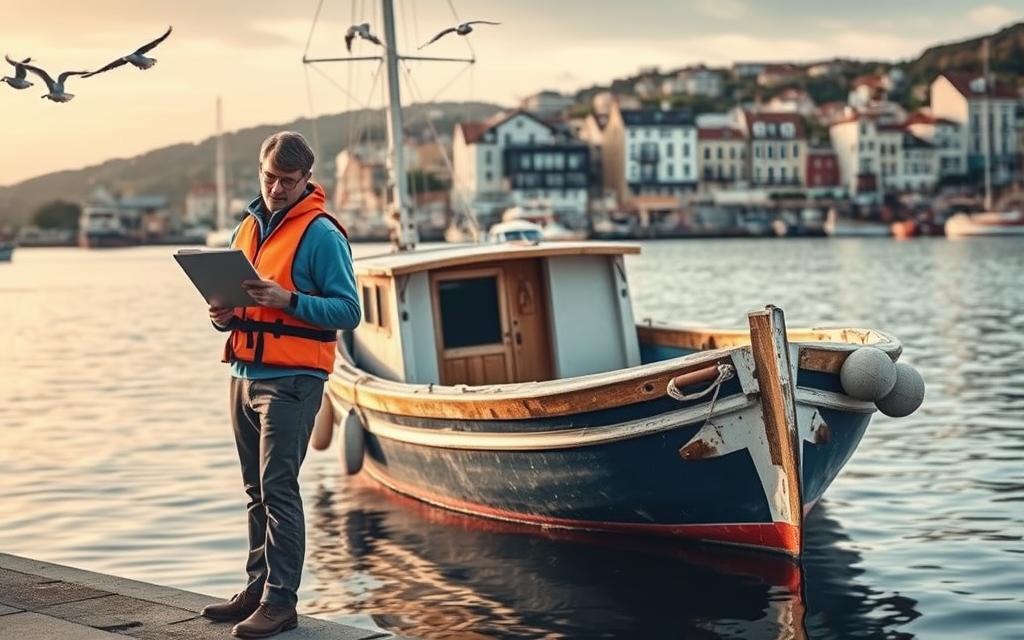
When a boating incident happens, you must tell your insurance right away. Quick action can help your claim succeed and get you the right help.
Knowing how to file a claim is important. It helps you deal with marine insurance better. Reporting fast and right helps protect you and get the support you need.
Why Prompt Reporting Matters
Waiting too long to tell your insurance can cause big problems. They usually need:
- Immediate incident reporting
- Detailed accident documentation
- Comprehensive evidence collection
Essential Information to Prepare
Before you call your insurer, get important documents ready:
- Precise accident location and time
- Vessel registration details
- Damage assessment photographs
- Witness contact information
- Police or Coast Guard report numbers
Understanding Your Coverage
Boat insurance plans are different. Check your policy to know what you can get back for damage, medical costs, and legal help.
Being proactive and detailed in your report is key to a smooth claim process after a boating incident.
Collaborating with Other Involved Parties
After a boat collision, talking to other boat operators is key. Good communication helps solve problems and can affect legal issues.
Boat operators should be professional and calm when talking to others. The main goal is to share important info and protect your rights.
Professional Communication Strategies
- Stay calm and be polite during talks
- Get contact and insurance info from others
- Don’t say you’re to blame or point fingers
Responsible Information Sharing
Important info to share includes:
- Full names of boat operators
- Contact phone numbers
- Insurance company details
- Boat registration info
Managing Possible Disputes
Disputes can happen during boat accidents. Legal experts say to stay neutral and just share facts. Let official investigations figure out who’s at fault. Focus on getting the right info.
Remember: Your main goal is safety, keeping records, and working together to solve issues.
Filing Required Reports
After a maritime incident, boat operators face many reporting rules. Knowing what to do is key for staying legal and responding right.
Types of Mandatory Reports
- Coast Guard Incident Report
- State Marine Law Enforcement Report
- Insurance Company Notification
- Personal Vessel Log Documentation
Reporting Deadlines and Requirements
Each place has its own time limits for reports. Quick and correct reporting helps avoid legal trouble.
| Incident Type | Reporting Deadline | Required Documentation |
|---|---|---|
| Fatality | Within 48 hours | Detailed accident description |
| Serious Injury | Within 72 hours | Medical reports and witness statements |
| Property Damage | Within 10 days | Damage assessment and repair estimates |
Record Keeping Strategies
Keeping good records helps boat operators avoid legal issues. Keep both digital and paper copies of reports safe.
- Scan and digitize all physical documents
- Create a dedicated incident file
- Backup digital records in multiple locations
- Retain documents for at least three years
Good records show you’re serious and ready for any future checks.
Learning from the Experience
Boating accidents can change a vessel operator’s life. They can learn and grow from these experiences. This helps keep everyone safe on the water.
Every emergency on a boat teaches something new. By looking at what went wrong, operators can get better. They can learn how to stay safe.
Reviewing Safety Protocols
Looking at safety plans is important. You should check:
- Equipment functionality
- Communication systems
- Emergency response readiness
- Crew training and preparedness
Understanding Common Causes of Accidents
Knowing why accidents happen helps avoid them. Watch out for:
| Accident Cause | Prevention Strategy |
|---|---|
| Operator Inexperience | Regular Safety Training |
| Equipment Failure | Routine Maintenance Checks |
| Weather Conditions | Comprehensive Weather Monitoring |
Educating Yourself and Your Crew
Learning never stops in boating. Take part in:
- Advanced boating safety courses
- Certification programs
- Professional workshops
- Industry conferences
By being proactive, boat operators can turn bad experiences into good ones. They can get better at keeping everyone safe.
Enhancing Future Safety Measures
To stop boating accidents, we must act early. Boat owners need to make safety a big deal. They should always think about keeping everyone safe.
Implementing Regular Boat Inspections
Checking boats often is key to safety. Boat owners should make a plan to check their boats. They should look at:
- Hull integrity and structural condition
- Engine and mechanical systems
- Electrical components
- Navigation equipment
Upgrading Safety Equipment
Having the right safety gear is important. Get the latest safety equipment that meets Coast Guard rules. Experts say to check and update your gear often.
Engaging in Boating Safety Courses
Learning new things is important for boat owners. Take advanced boating safety courses. They teach:
- Updated navigation techniques
- Emergency response training
- Advanced maritime safety protocols
- Latest technological safety innovations
Knowing a lot and being ready can help avoid sea troubles.
Building a Support Network
Boating is more than just knowing how to sail. It’s about having a strong support system for when things go wrong. Having a network of resources can really help in tough times.
Joining local boating groups and online forums is a great idea. They share tips on how to handle emergencies. The United States Coast Guard Auxiliary and local marine safety groups offer training and support.
Having a good lawyer is important after an accident. They can help you understand your rights and what you might get in compensation. The American Bar Association can help find lawyers who know about boating law.
Being part of the community makes boating safer for everyone. Joining clubs, going to safety workshops, and helping out in local initiatives is important. Together, we can all learn and make the water safer.