

Are you ready if your company’s secret data gets stolen? Laws about telling people about data breaches are very important. They help keep both customers and businesses safe online.
The internet is full of dangers. In the first half of 2024, over 1 billion people had their data stolen. This shows we really need strong laws and ways to report leaks.
Laws say companies must tell people fast if their data gets stolen. These rules help keep people safe by being open and acting quickly when data is at risk.
Knowing these laws well can help your company recover fast. Or it could cause big problems. This guide will help you understand how to follow these laws.
Key Takeaways
- Data breaches impact billions of individuals annually
- Prompt notification is key for following the law
- Different groups have their own rules for reporting
- Being ready can stop data theft
- Not following the law can lead to big fines
Understanding Data Breach Notification Laws
In today’s world, keeping data safe is very important. Laws about data breaches help keep both people and businesses safe. These laws help fix security problems and protect privacy.
What Defines a Data Breach?
A data breach happens when someone gets into private info without permission. This can happen in many ways, like:
- Hacking of digital systems
- Accidental exposure of sensitive data
- Theft of physical documents or electronic devices
- Internal security failures
Importance of Cybersecurity Disclosure Rules
These laws help keep people safe by making companies report data loss. Being open about data is key today. It helps people protect themselves.
Key Terms to Understand
To get data breach laws, you need to know some words:
- Personal Information: Stuff like names, social security numbers, and bank info
- Security Breach: When someone gets into private info without permission
- Notification Timeline: How long companies have to tell about a data breach
Knowing these laws helps companies keep trust. It also helps protect people’s rights and follow the law in our digital world.
Federal Data Breach Notification Laws
Data breaches are a big risk for many businesses. Federal laws help set rules for sharing this info. They aim to keep our personal data safe.
The U.S. has made several laws to protect our data. Two main laws are important for telling people about data breaches:
Health Insurance Portability and Accountability Act (HIPAA)
HIPAA has strict rules for health care groups. It includes:
- They must tell people right away if their health info is stolen.
- They have to report within 60 days of finding out about a breach.
- They must follow specific steps to tell people and the government.
Gramm-Leach-Bliley Act (GLBA)
GLBA has rules for banks and other financial places. It covers:
- Keeping safe the info of people’s bank accounts.
- Having clear plans for when a breach happens.
- Using strong security to protect data.
It’s very important for companies to know these laws. They help keep data safe and avoid big problems. Each law has its own rules that companies must follow.
State-Specific Data Breach Notification Laws
Understanding state breach notification laws is very important. Each state in the U.S. has its own rules for handling data breaches. This makes it hard for businesses to follow all the rules.
Company data loss laws change a lot from state to state. It’s very important for companies to know the laws in their area. Some states have very strict rules to protect people’s data.
Variations Across State Boundaries
There are big differences in state breach notification laws. These include:
- Notification timelines ranging from 30 to 60 days
- Specific definitions of personal information
- Minimum number of affected individuals triggering notification requirements
- Mandatory reporting to state attorneys general
Notable State Law Examples
Some states have very strong data protection laws. These include:
- California: The California Consumer Privacy Act (CCPA) sets a high standard for consumer data protection
- New York: The SHIELD Act provides extensive requirements for data breach notifications
- Massachusetts: Requires detailed security protocol implementations
Compliance Challenges for Organizations
Businesses face big challenges in following all the state laws. They need to create good plans for notifications and keep track of all data. They also need to keep up with new laws.
State breach notification laws are very complex. Companies in all industries must stay very careful and always follow the rules.
Who Must Comply with Data Breach Laws?
Data breach laws are important for many groups that handle personal info. It’s key to know who must follow these laws to keep data safe.
Many types of groups must protect personal info. Laws for data breaches apply to different kinds of groups.
Businesses and Organizations
Businesses have big jobs in keeping customer data safe. They need to use strong security to avoid risks:
- Retail corporations
- Financial institutions
- Healthcare providers
- Technology companies
- Small and medium-sized enterprises
Government Agencies
Government groups also must keep data safe. They need to:
- Make strong data security plans
- Check for risks often
- Use safe ways to manage info
- Teach staff about keeping data safe
Service Providers
Service providers are very important in keeping data safe. They must follow strict rules when handling personal info, like:
- Cloud storage providers
- IT support services
- Payment processing companies
- Customer relationship management platforms
No matter the size or type of group, it’s vital to have strong data protection. This is true in today’s digital world.
When Must Notifications Be Sent?
When a security breach happens, timing is everything. Companies must quickly tell users and stop more damage. How fast they act depends on laws and the breach’s type.
Rules say when to report a breach. Acting fast helps protect people and shows a company cares about being open.
Notification Timelines
Most places say to tell users fast after a breach:
- 72 hours for many state and federal rules
- Right away for very risky breaches
- Up to 30-45 days in some places
Factors Influencing Notification Urgency
Several things make a breach report urgent:
- How sensitive the data is
- Chances of identity theft
- How many people are affected
- What kind of info was stolen
Recommended Best Practices
To send good breach notices, companies should:
- Have a solid plan for dealing with breaches
- Check security often
- Teach staff about how to handle breaches
- Keep records of all breach talks
Being open and quick helps keep customers’ trust. It also lowers legal and image risks from data breaches.
What Information Must Be Included in Notifications?
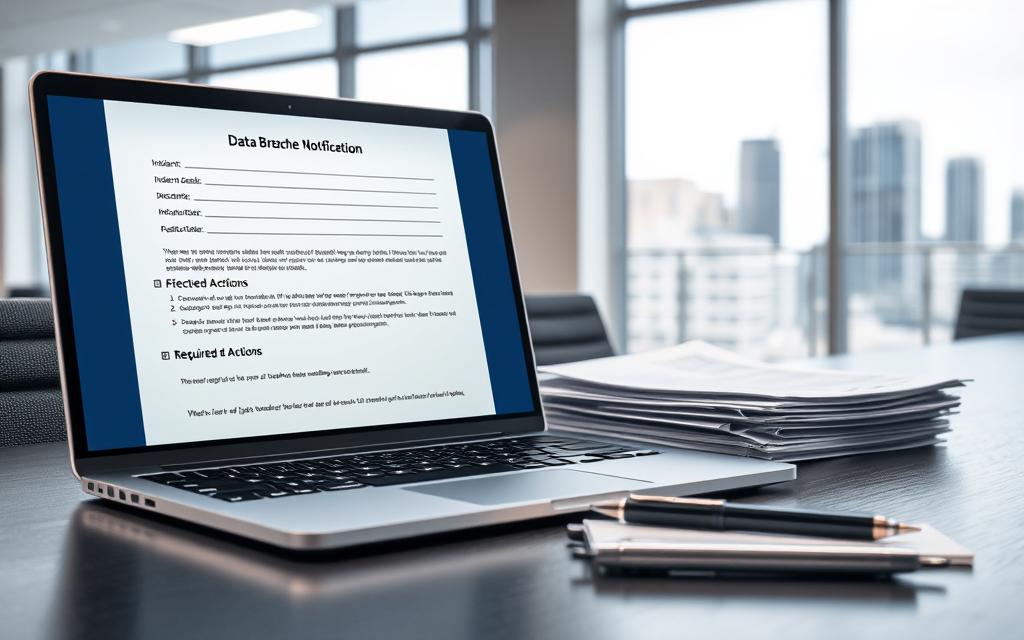
Making a good customer breach letter needs careful thought. It must follow data incident response law. It’s important to tell people clearly and openly about possible data leaks.
The rules for email breach notices say what must be in any alert:
- Detailed description of the data breach
- Specific types of personal information compromised
- Potential risks to affected individuals
- Recommended protective actions
Required Notification Contents
A good customer breach letter should have important info. It helps people understand and act on the breach. Key parts usually include:
- Date of discovery: When the breach was first found
- Nature of compromised data: What kind of info was leaked
- Contact info for more help
- Steps to stop future breaches
Additional Recommended Information
Depending on the breach’s size and seriousness, more info might be needed. This could be:
- Free credit monitoring services
- Identity theft protection resources
- Help on possible financial risks
The aim of a strong data breach notice is to give people useful info. It also keeps things clear about the breach’s possible effects.
Consequences of Non-Compliance
Data breaches can cause big legal and financial problems for companies. They must follow cyber breach legal rules. Knowing the risks helps them make good plans for legal data breach responses.
Companies that don’t report breaches face big risks. These risks are in many areas:
Legal Penalties and Fines
Not following rules can cost a lot of money. Rules makers can fine companies a lot:
- GDPR violations can cost up to €20 million or 4% of global annual turnover
- HIPAA non-compliance penalties range from $100 to $50,000 per violation
- State-level regulations may add more financial penalties
Reputational Damage
Companies also face damage to their reputation. Customer confidence can drop fast when data protection fails.
Impact on Customer Trust
Handling data breaches badly can hurt a business for a long time:
- Customers leave right away
- Bad media coverage
- Loss of business partnerships
- Lower market value
Being proactive and open is the best way to avoid these big risks.
Steps to Take After a Data Breach
After a data breach, you must act fast and smart. You need to follow strict rules to lessen harm and meet legal standards.
Time is very important after a data breach. Quick actions can help a lot. They can protect your company and the people affected.
Immediate Actions to Mitigate Damage
- Isolate the affected systems immediately
- Conduct a rapid internal investigation
- Preserve all digital evidence
- Engage cybersecurity experts for thorough assessment
Notifying Affected Individuals
It’s important to tell people who were affected clearly. Your message should be simple and direct. It should include:
- Nature of the breach
- Potential consequences
- Steps individuals can take to protect themselves
- Contact information for further assistance
Engaging with Regulatory Authorities
Talking to the right people is key. Each area has its own rules for reporting breaches.
| Sector | Reporting Timeframe | Primary Regulatory Body |
|---|---|---|
| Healthcare | 60 days | HHS Office for Civil Rights |
| Financial Services | 72 hours | Federal Trade Commission |
| Education | 30-45 days | State Education Departments |
Being ready and quick to act is vital in dealing with data breaches.
The Role of Cybersecurity in Prevention
In today’s digital world, keeping information safe is very important. Laws and rules about data and cybersecurity tell companies to protect well. They need to stop bad things from happening.
Building a strong security plan is key. It must cover many areas to keep data safe. Companies must find and fix weak spots in their systems.
Building a Strong Security Infrastructure
Good cybersecurity needs a few important things:
- Advanced encryption technologies
- Multi-factor authentication systems
- Real-time threat monitoring
- Comprehensive network security protocols
Regular Security Audits
Doing security checks often helps a lot. These checks find problems before they get worse. This way, companies can fix things before they cause trouble.
| Audit Type | Frequency | Primary Focus |
|---|---|---|
| Vulnerability Assessment | Quarterly | Network Security |
| Penetration Testing | Bi-Annually | System Resilience |
| Compliance Review | Annually | Regulatory Alignment |
Employee Training and Awareness
People can make mistakes that hurt security. Good training programs teach staff about dangers and how to avoid them. This helps keep data safe.
It’s important for everyone in a company to know about security. They should all help protect important information. They should also know how to spot and stop problems.
Trends and Changes in Data Breach Laws

The world of personal data breach laws is changing fast. This is because of more digital risks and people knowing more about their data. Companies need to keep up with these changes to keep data safe and follow the rules.
New laws are making data breach rules stricter in many places. The rules are getting more complex and strict. This is making data protection plans more important.
Recent Legislative Developments
Many countries are making their data privacy laws stronger. Some big changes include:
- Expanded rules for who must follow data protection laws
- Tougher fines for breaking the rules
- More rights for people whose data is used
- Stricter rules for when companies must report breaches
Emerging Trends in Data Protection
The digital world is seeing big changes in data laws. Companies need to keep up with trends that focus on:
- Being clear about how data is used
- Staying ahead of cyber threats
- Protecting individual privacy
- Keeping data safe across borders
The Future of Data Breach Regulations
Experts think data protection laws will keep getting better. Technological advancements and more cyber threats will lead to stronger rules. These rules will focus on stopping breaches and acting fast when they happen.
Companies need to be quick to change their data protection plans. They must keep up with the fast-changing rules.
Case Studies of Data Breaches
Data breach laws help keep our private info safe. In 2023, we learned how key it is to protect our data well. We also saw how important it is to tell people when there’s a problem.
Many big data breaches happened in 2023. These show us how vital it is to follow laws about keeping data safe. They teach us the big risks of not being careful with our digital info.
High-Profile Data Breach Examples
- Equifax (2017): Exposed personal data of 147 million Americans
- Yahoo (2013-2014): Affected 3 billion user accounts
- Target (2013): Compromised 41 million customer payment card accounts
Lessons Learned from Real Scenarios
Every big data breach teaches us something new. Companies need to:
- Act fast when something goes wrong
- Tell people what’s happening
- Check their security often
- Teach their workers about staying safe online
Recommendations from Past Incidents
To handle data breaches well, be ready ahead of time. Important steps include:
Using strong security in many layers. Checking for weak spots often. And having a plan for when things go wrong.
| Company | Year | Records Affected | Response Effectiveness |
|---|---|---|---|
| Equifax | 2017 | 147 million | Low |
| Target | 2013 | 41 million | Medium |
| 2021 | 700 million | High |
Learning from these examples shows how vital strict data breach laws are. They help keep our info safe and keep companies strong.
Best Practices for Data Breach Preparedness

Keeping sensitive info safe needs a proactive plan. Companies must have strong strategies ready for security issues. This helps lower risks.
Developing a Robust Response Plan
Creating a good legal data breach response plan is key. It includes:
- Identify key team members for incident management
- Set up clear communication plans
- Define roles in a breach
- Make detailed plans for documentation
Ongoing Risk Assessments
Regular risk checks are vital for breach reporting. Companies should:
- Do security checks every quarter
- Find and map possible weaknesses
- Test security systems
- Keep security up to date
Collaborating with Legal Experts
Working with cybersecurity lawyers is important. They help avoid big mistakes. They guide through complex rules.
Following these steps shows a company cares about data safety. It keeps customer trust.
Resources for Further Information
Understanding data breach laws is hard. It needs constant learning and good resources. People working in this field can find many ways to learn about reporting data loss.
Government sites are full of useful info. The Federal Trade Commission (FTC) has lots of tips for businesses. State attorneys general offices have info for local laws. The National Institute of Standards and Technology (NIST) has guides on cybersecurity.
Professional groups help a lot too. The International Association of Privacy Professionals (IAPP) and the Information Systems Security Association (ISSA) offer training. They also have places to meet and learn from others.
Online courses and conferences are great for learning more. It’s important to keep learning in a world that changes fast. Knowing about privacy and laws helps keep information safe.